ICD-10 is coming up and will be here before we know it! OACHC along with multiple other organizations want to make sure you can get the information you need. Here is a compilation of ICD-10 resources and events you can sign up for to get ICD-10 ready!
OACHC
OACHC's upcoming ICD-10 Training: Roadmap to Change
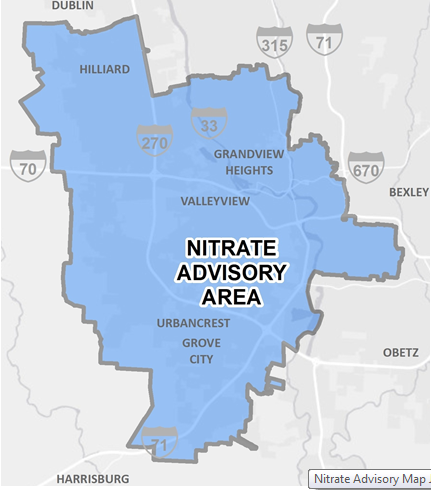
The Columbus Division of Water has issued a nitrate advisory June 8th and the advisory remains in affect (view the advisory here). If you live, are traveling to the affect area you should know about this advisory.
The Columbus Medical Association advises us to "be aware of nitrate toxicity as a potential cause of methemoglobinemia, especially in young infants". Learn More
The Columbus Division on Water is warning people not to give tap water to infants below 6 months of age. This includes using it for anything the infant may consume (formula, juice, baby cereal..)
A first instinct may be to boil the water. However, boiling the water actually increases the nitrate level. The Columbus Division of Water specifically warns, DO NOT BOIL THE TAP WATER.
According to the Columbus Division of Water, Healthy adults and older children can consume higher levels of nitrate because they have fully developed digestive systems.
Remember, Pregnant adults even if healthy should not consume the tap water while the advisory is going on. ODH is providing bottled water to infants and pregnant women who cannot obtain bottled water on their own and are in the area impacted by the high nitrate levels in Ohio. Learn more here
Even if you are not in the affected area it is always good to know what to do if it ever happens in your area. Here are someFAQs on Nitrates in Water .
Restoration of Medicaid Coverage for Pregnant Women in State Budget Needed
Access to Prenatal Care is Absolutely Necessary
The state budget bill also known as House Bill 64, includes a provision that will reduce Medicaid eligibility for pregnant women from 200% of FPL to 138% FPL. While we understand the strategy to move these women from Medicaid to the Marketplace, because of limitations set in place by the federal government, we do not believe now is the appropriate time for such a transition and advocate for restoration of the 200% eligibility limit.
Ohio uses the federal exchange for Marketplace enrollment. There is a single open enrollment period that spans three months, once a year. While there are opportunities to gain coverage outside those three months (Special Enrollment Periods or SEP), becoming pregnant does not trigger an SEP or access to Marketplace coverage. Therefore under HB 64, if a women between 139 and 200% FPL is either unable to gain Marketplace coverage or chooses to pay the federal mandate penalty instead of enrolling and then becomes pregnant, she cannot access health care coverage until the next Open Enrollment period. In this instance, both women and their unborn children are at risk. With Ohio’s abysmal infant mortality rates, maintaining eligibility as it is today at 200% FPL ensures Ohio women do not fall in this coverage gap and provides a path to access the prenatal care they need.
Premature Births - By the Numbers
The cost of maintaining the current coverage for pregnant women in Medicaid at up to 200% FPL is estimated at $15M for the upcoming biennium. HB 64 proposes to reduce eligibility to 138% FPL, a change which can ultimately lead to less access to prenatal care, and in turn, worse birth outcomes and increased infant mortality rates. Specifically:
• According to Nationwide Children’s Hospital, NICU stays average $66,000 in Franklin County and can cost in excess of $2M. • The U.S. Agency for Healthcare Research and Quality accounts that medical costs for the average very-low-birthweight infant are $79,000, compared with $1,000 for a normal newborn. • National data has shown that the average cost in the short term of an extreme premature birth to be well over $100,000, and between $40,000 and $100,000 for early premature birth. Other data has shown that children born before 32 weeks have costs over $280k on average. • Hospital Length of Stay: The March of Dimes reports that premature and low birth weight infants spend an average of 15 days in the hospital, compared to just 2 days for healthy, full-term infants.
Further, if Ohio scales back Medicaid coverage for pregnant women between 139 – 200% FPL it is important to note that once the child is born to a mom who falls in that coverage gap, Medicaid in all likelihood will cover the child’s immediate and long-term health care costs – whether good or bad. So even if we don’t pay for the health insurance coverage of Mom-to-be, we will cover the child once born and his or her birth outcomes.
Early entry into care is associated with better birth outcomes which we all want, and health insurance coverage is an important and essential tool in getting women into care as soon as possible. Improved birth outcomes translate into substantial cost savings, because the costs associated with preterm births are estimated to be 10 times greater than those for full-term births.
We have a cause and effect scenario. According to the ODM’s 2014 Report on Pregnant Women, Infants and Children, the average total cost during pregnancy of a woman enrolled in Medicaid in 2013 was $8,458. And the average cost of caring for premature or a low birth-weight baby for its first year of life is about $49,000. Simply put, if more women go without prenatal care, the more likely Medicaid will have to cover infants at a higher cost.
IN SHORT: The return on investment is clear. Maintaining Medicaid coverage for pregnant women to 200% FPL is cost-effective, provides a pathway forward for full-term pregnancies and positive birth outcomes, and will keep Ohio on track to improve our infant mortality rate.
Strokes or "Brain Attacks" are all too common. Anyone at any age can have a stroke. It is very important to learn the facts about strokes and to be able to identify the signs and symptoms. Prevention of a stroke according to the CDC can include eating a healthy diet, maintaining a healthy weight, exercising, limiting alcohol, and keeping low blood pressure and cholesterol (http://www2c.cdc.gov/podcasts/player.asp?f=8632596).
If there is an instance when you or someone else is experiencing the symptoms of a stroke it is key to act FAST!
F=Face
A=Arm
S=Speech
T=Time
Awareness Tools for Healthcare Professionals
Strokeawareness.com provides a myriad of helpful tools for healthcare professionals that explain the importance of stroke prevention. Here you can download tools or order free printed materials.
Today is Heat Safety Awareness Day! Although, it is still spring we all know that hot summer days are quickly approaching. It is best to be prepared and know what to do in the inevitable event of warm to hot temperatures and extreme heat.
Did you know?
Data shoes that from 2004-2013, heat was the highest of the weather fatalities. View all results
May is National Mental Health Awareness month. Often times mental health gets pushed aside because it is a part of us that cannot be seen. The truth is though, everyone should be working their mental health. Stress, family, environment, money, there are many things that could play a part in mental health. Learn some facts, ways to spread awareness and more!
"In 2015, America’s Health Centers will celebrate 50 years of success in expanding access to quality and affordable primary and preventive healthcare services to millions of uninsured and medically underserved people nationwide." (http://chchistory.nachc.org/)
In 2014 Ohio community health centers served nearly 574,000 patients and staffed over 3,000 full-time equivalents. Also, our Ohio CHCs had over 1.9 million patient visits!
Community health centers provide such valuable resources for all people across the state. Ohio currently has 44 community health center organizations, equaling 222 CHC sites across the state. 73% of our CHC organizations have at least one health center that is PCMH recognized!